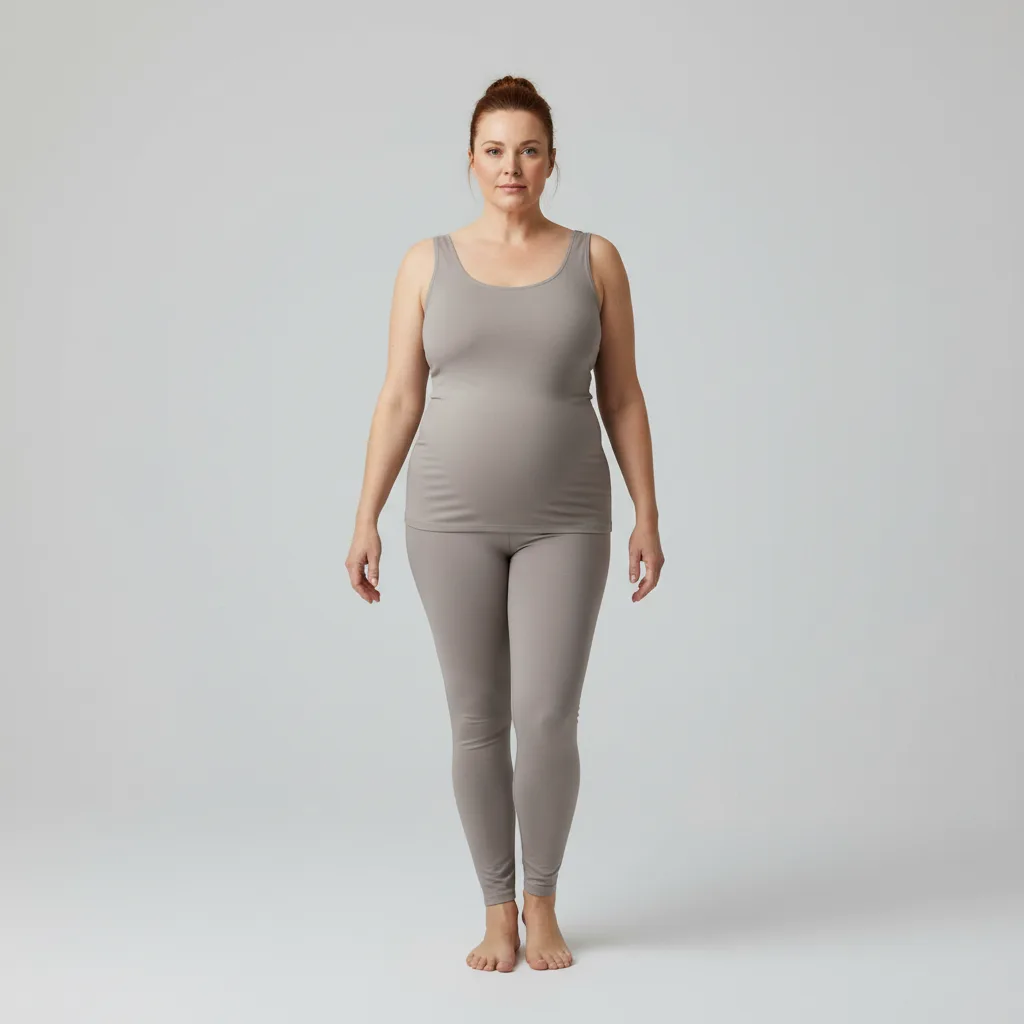
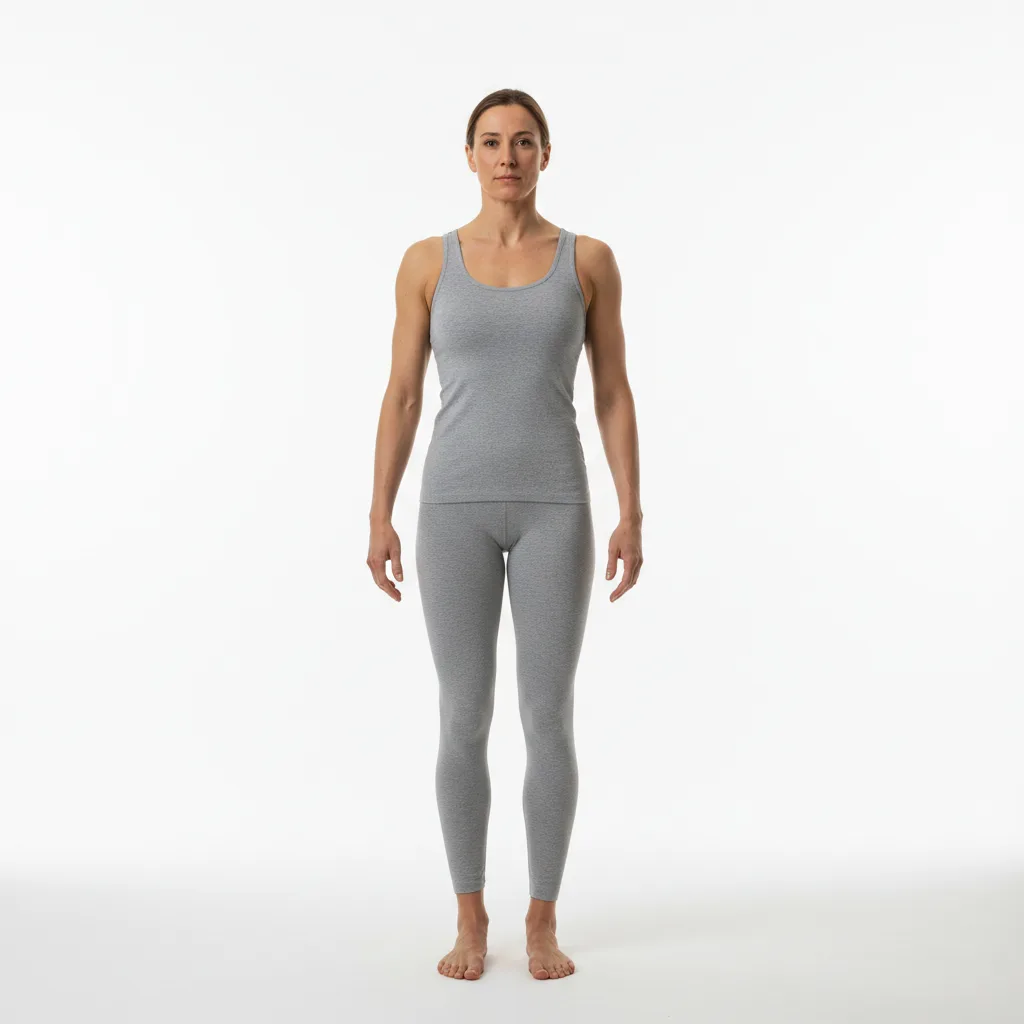
Body shape · three widths nearly equal
Rectangle Body Shape: The Complete Style Guide
Your shoulders, waist, and hips share a similar width, creating a clean, straight silhouette from top to bottom. This is not a "lack of curves"—it is a balanced, versatile frame where waist definition is created through smart styling rather than found in the mirror. Here is how to create dimension, layer effectively, and style the rectangle body shape with confidence.
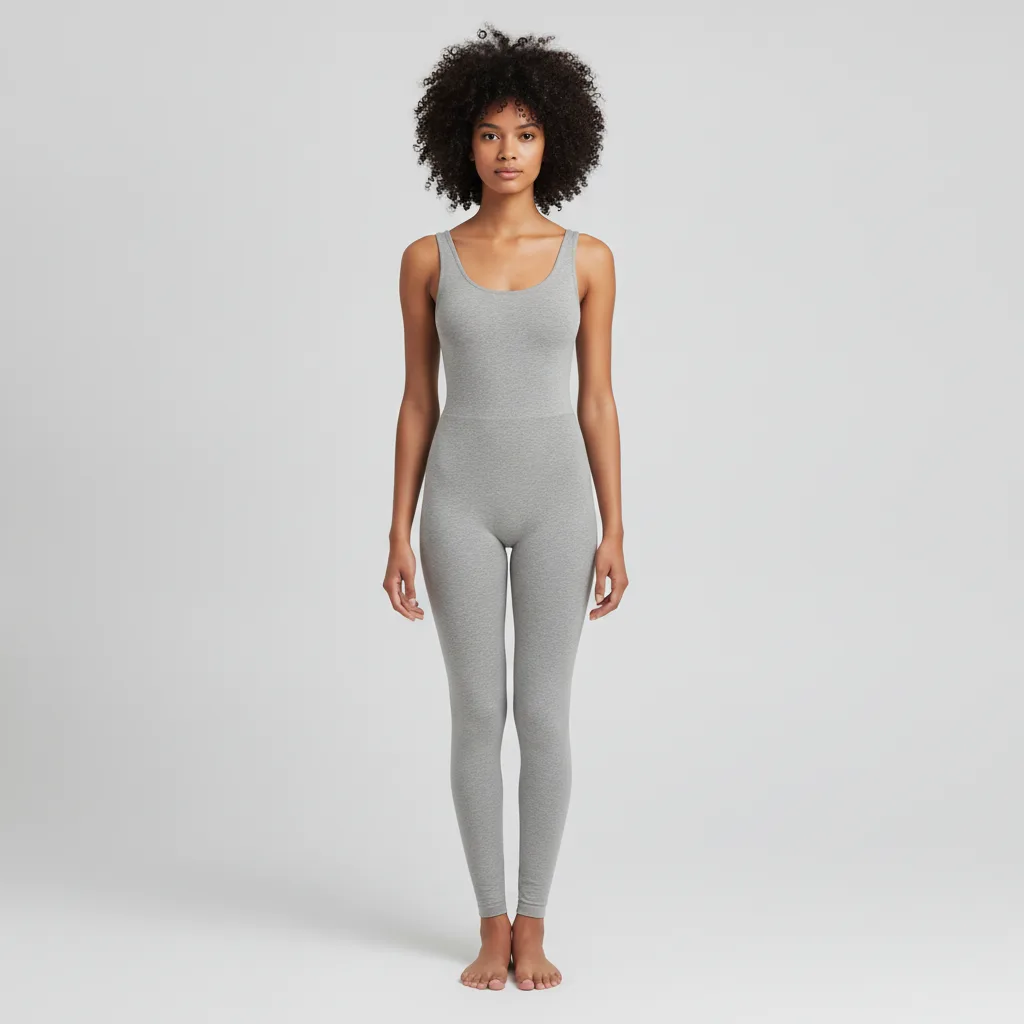
How to Know If You Have a Rectangle Body Shape
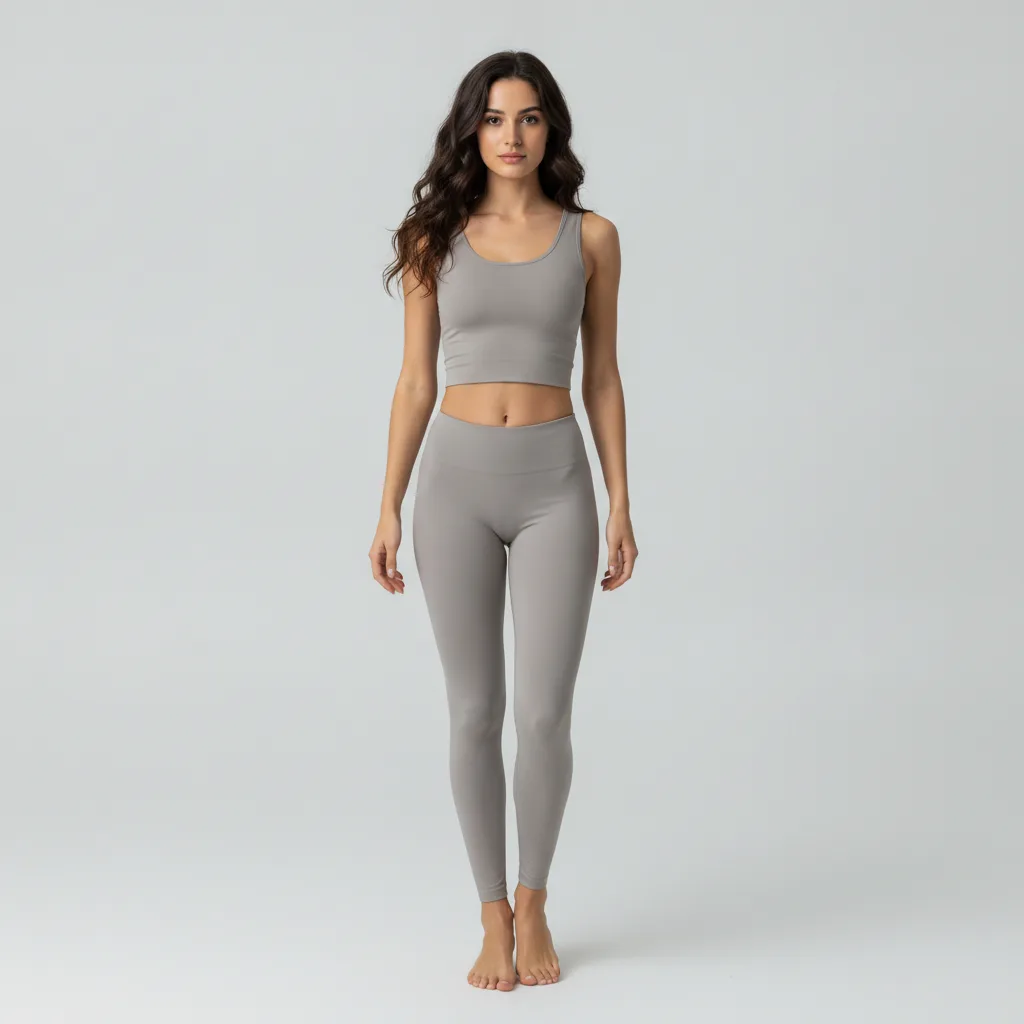
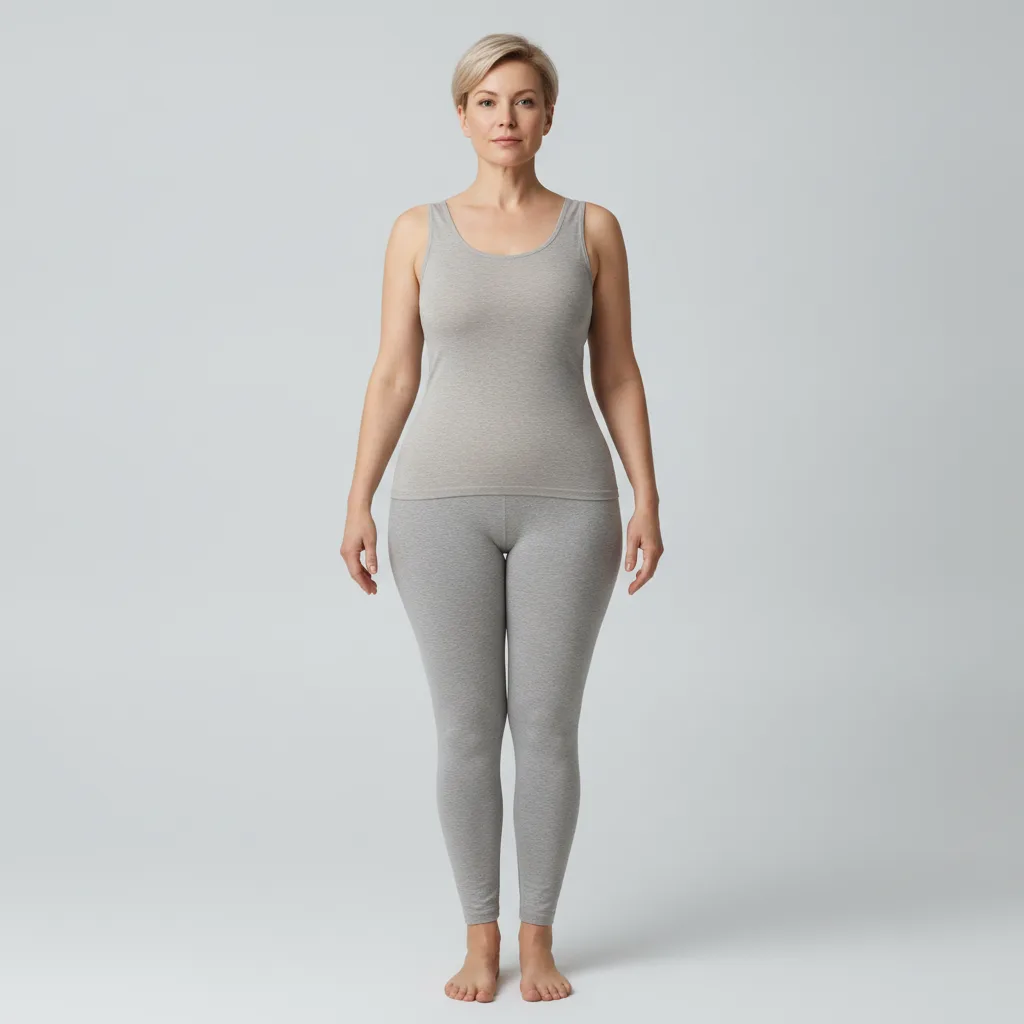
The rectangle (often called the banana or athletic H-silhouette) is defined by two main traits: shoulders, waist, and hips are roughly the same width, with the waist being less than 20% smaller than the hips. The silhouette runs in a straight, balanced line from top to bottom without an obvious natural curve.
This is the most common frame among slender and athletic builds and is frequently mistaken for an hourglass: a lean silhouette can easily be confused with true curves.
The Three Key Measurements
Measure your shoulders, the narrowest point of your waist, and the fullest part of your hips. For a rectangle, your shoulders and hips are within 5% of each other, while your waist is less than a fifth smaller than your hips: with 95 cm hips, your waist will be 78 cm or wider.
Side Profile
The line from your underarm to your hip runs almost vertically. If you place the edge of your hand flat along your waist, there is almost no gap between your hand and body—unlike the noticeable inward dip of an hourglass.
The Ultimate Fitting Room Test
A practical telltale sign: straight-cut dresses and button-down shirts fit you effortlessly without tailoring, while sharply tailored, fitted pieces tend to bag at the waist or pull across the chest. A belt placed at your midsection does not just highlight a waist—it creates a focal point that is not naturally defined.
Proportions
Each bar is measured against the widest point of the silhouette: these are typical proportions for the shape, not your measurements.
| Measurement | What to Look For | Rectangle |
|---|---|---|
| Shoulders vs. Hips | Width difference | Within 5% |
| Waist vs. Hips | Degree of taper | Less than 20% smaller |
| Side Profile | Contour shape | Nearly straight vertical |
| Fitting Room | How straight cuts fit | Flattering, no tailoring needed |
Find your body shape with a photo →
What Works for This Silhouette
The styling goal for a rectangle is to create the illusion of a waistline using clothing. Rather than searching for an existing curve, you build one using belts, darts, layering, and balanced volume. Because any curve is the result of tailoring and structure, this body shape is exceptionally versatile: you can easily style it into an hourglass or lean into a sharp, minimalist athletic line.

The second most effective technique is volume contrast. Pairing a relaxed top with a fitted bottom—or vice versa—works significantly better than uniform volume all over: two wider focal points naturally make the middle section appear narrower.
What to Avoid
Anything that simply repeats your body's natural geometry works against a rectangle: layering straight, boxy cuts over straight bottoms without any break.
A special note on long, monochrome outfits: while they create a flattering elongating effect, wearing them without waist breaks can leave the silhouette looking flat. Adding a tonal belt or tucking in your top is all it takes to break up the solid vertical line.
Rectangle vs. Adjacent Body Shapes
Rectangle vs. Hourglass: The 20% Rule
The distinction comes down entirely to waist definition. If your waist is 20% smaller than your hips or more, you are an hourglass, where the goal is simply to showcase your waist rather than construct it. Rely on measuring tape: to the naked eye, a slender rectangle and an hourglass can look very similar, especially in fitted clothing.
Rectangle vs. Apple: The Midsection
If your midsection is equal to or wider than your hips, you have an apple shape. Styling techniques differ fundamentally: belts flatter a rectangle, while an apple benefits more from open vertical lines.
Rectangle vs. Inverted Triangle: The Shoulder Line
If your shoulders are more than 5% wider than your hips, you are an inverted triangle, needing volume at the bottom. A rectangle benefits from volume both at the top and bottom—paired with an intentional cinch at the waist.
| Feature | Rectangle | Hourglass | Apple |
|---|---|---|---|
| Waist vs. Hips | Less than 20% smaller | 20%+ smaller | Equal to or wider |
| Primary Strategy | Create a waistline | Highlight natural waist | Elongate central vertical |
| Peplums & Basques | Very flattering | Very flattering | Avoid |
| Head-to-Toe Oversize | Erases silhouette | Erases silhouette | Adds visual bulk |
Wardrobe Essentials by Category
Tops
Tucked-in tops, cropped cuts, knotted shirts, and blouses with pleats or soft draping all work wonders. Peplums are arguably the single most flattering silhouette for this shape: the flare right below the waist creates curves right where you need them. Statement sleeves also work well by establishing a defined upper anchor.
Bottoms
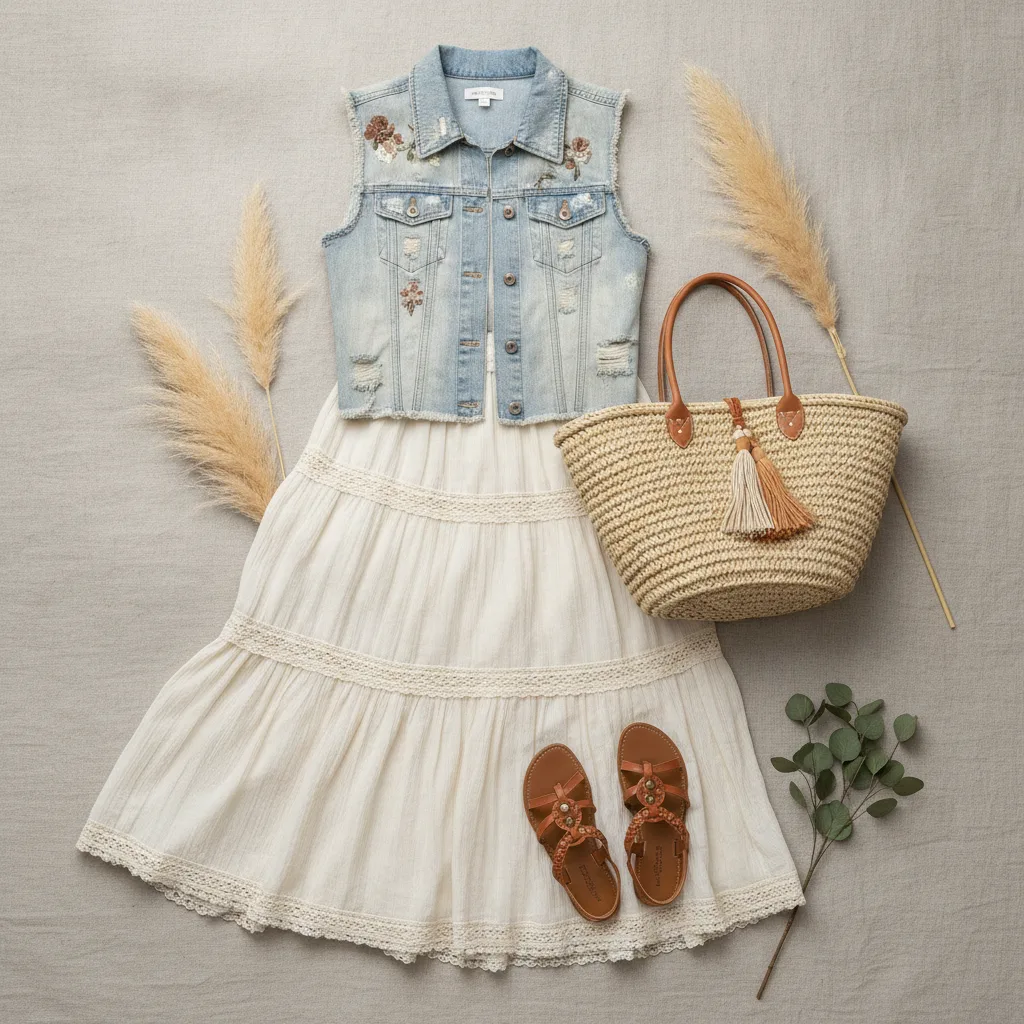
A-line skirts, circle skirts, pleated styles, high-waisted pleated trousers, and wide-leg palazzo pants are ideal. High-rise bottoms are especially effective here: they place the waistline exactly where you want it visually, rather than where it sits anatomically.
Dresses
Belted dresses, wrap dresses, corset-bodice styles, and fit-and-flare cuts that flare out from the waist are top choices. A straight sheath dress without detailing will mirror your natural line, so it is best styled with a belt or layered under a tailored vest.

Layering
Rectangles carry layered outfits better than almost any other body type: a tailored vest over a crisp shirt, a belted cardigan, or a cropped blazer over a maxi dress. Each layer adds structural dimension and breaks up a flat vertical line.
Outerwear
A belted trench coat, a coat with a drawstring waist, or a tailored quilted jacket. Straight-cut coats work beautifully too, provided you belt them—otherwise, they simply form a boxy layer over a straight frame.

Fabrics and Textures
Fabric weight is less important than its ability to hold shape and structure. The rectangle shape benefits immensely from medium-to-heavy materials that sculpt contours where the body naturally lacks them.
- Flattering: Crisp cotton, taffeta, poplin, tailored suit wool, pleated polyester, and rigid, non-stretch denim.
- Use with caution: Thin, clingy jersey that simply hugs the frame without adding shape, and limp fabrics that hang in a shapeless column.
Common Styling Mistakes
The first mistake is viewing a rectangle as a "challenging" shape. In reality, it offers the greatest styling freedom: both sleek, minimalist straight cuts and ultra-feminine cinched looks drape effortlessly on this frame. Your choice is stylistic, not restrictive.
The second is relying solely on a belt. Cinching a belt over a completely straight dress marks the waist, but if the fabric provides no volume above or below, the silhouette remains flat—just pinched in the middle. Belts work best when paired with contrasting volume.
The third is head-to-toe oversize. Pairing a slouchy sweater with loose, unstructured trousers erases any sense of proportion, turning the frame into a single solid block.
Frequently Asked Questions
Do corsets and corset tops look good on a rectangle shape?
Yes, they are one of the most effective tools for this body type: structured boning sculpts an hourglass curve that holds its shape effortlessly.
Can I wear straight-cut, shift, or column dresses?
Absolutely, and they drape better on rectangles than on most other shapes. It simply depends on the aesthetic you want: a straight cut maintains a sleek, linear look, which is perfectly chic if intentional.
Where is my waist located if it isn't clearly visible?
Bend sideways at your torso: the crease that forms marks your anatomical waist. It is usually higher than expected—roughly an inch above your belly button. Position belts and waistbands there, even if there is no pronounced natural curve.
Do hip-slung belts suit my frame?
Yes, if your goal is to elongate your torso rather than cinch your waist. A low-slung belt creates an interesting horizontal break and pairs well with shift dresses and tunic tops.
How should I dress an athletic, muscular rectangle frame?
The rectangle is the most common shape among active, athletic builds. Apply the same principles, but create upper-body volume through fabric texture rather than rigid structure: heavy shoulder pads on naturally broad shoulders can exaggerate straightness.
What if I am a rectangle with flat hips or a flat butt?
Add volume to your lower half with full skirts, front-pleat trousers, and cargo pockets. This is one of the few body shapes where extra detailing across the hip line is purely advantageous.
Try it on yourself
Every tool works from a single photo.