Eyebrow shapes
High-Arch Eyebrows: The Shape That Opens Up the Eyes
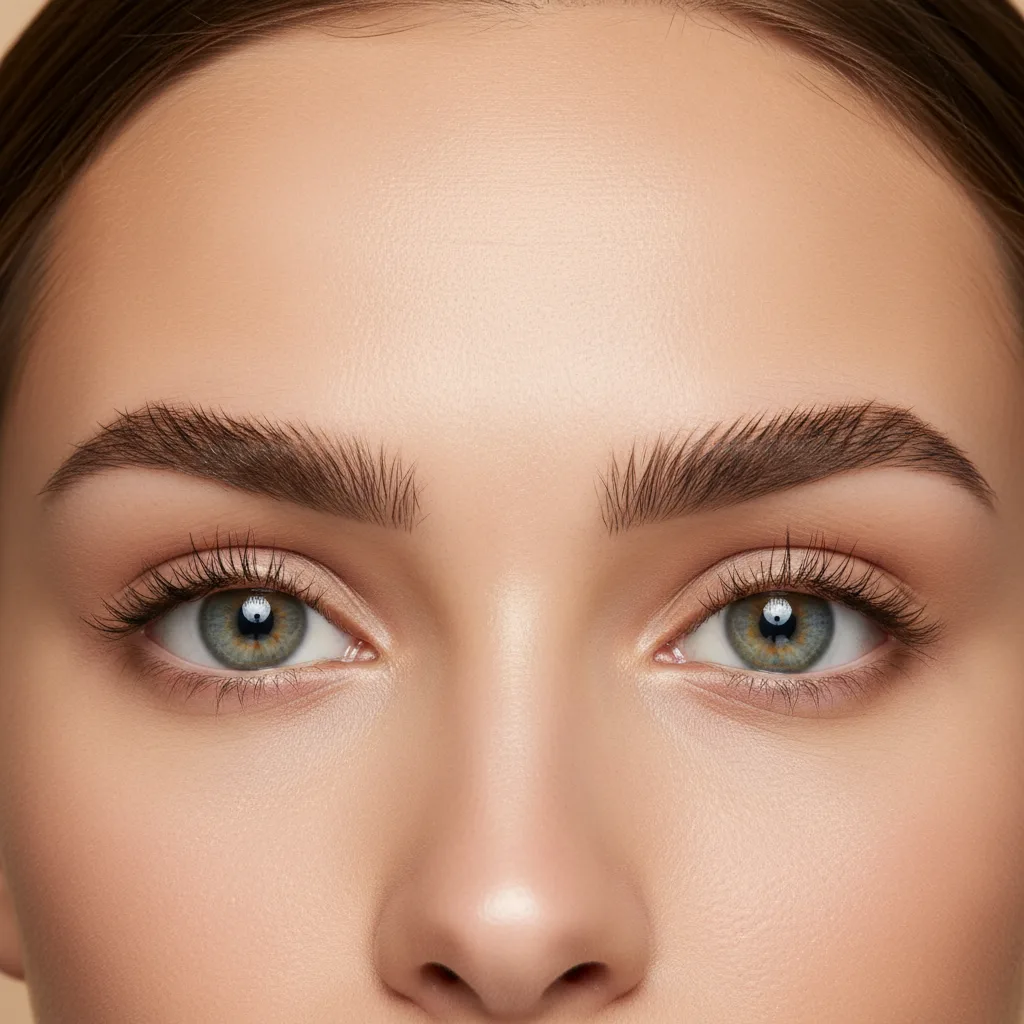
With the peak positioned well above the eye line and a pronounced upward lift, this shape visually opens the eyes and creates an instant lifting effect. It is also the most unforgiving: misjudge it by a fraction of an inch, and you trade an open, alert look for perpetual surprise.
What Is a High Arch
A high arch is a brow shape with an amplified upward lift: the peak sits in the same spot as it does in a soft arch (above the outer edge of the iris), but it is raised noticeably higher. The transition remains fluid—this shape features no sharp angles.
The main goal of this shape is to open up the gaze. It expands the visible distance between the eye and the brow, making the entire face appear more open and lifted.
Where to Draw the Line on Height
A practical rule of thumb: the distance from the mobile eyelid to the lower edge of the brow should not exceed twice the brow's own width. Once the gap grows any larger, the face takes on a permanently surprised expression, and the upper eyelid visually sinks in.
The forehead is the second limiting factor. A high arch simply will not fit on a short forehead: the peak runs into the hairline, making the upper third of the face look cramped and compressed.
Who It Suits
- Hooded eyes — a high arch opens up the space above the eye where lid real estate is limited.
- Round and soft faces — the lift introduces vertical lines that balance out facial proportions.
- High foreheads — with caution: the upward lift draws extra attention upward, so the peak should sit slightly lower than usual.
Which shape does your face ask for?
Upload a photo: your facial proportions are measured, and the shape follows them rather than a trend.
Analyze my browsWho Should Avoid It
Deep-set eyes. A high arch widens the orbital gap, causing the eye to recede further and creating a tired appearance.
Long face shapes. This shape emphasizes vertical length where there is already plenty.
| Feature | High Arch |
|---|---|
| Hooded eyes | Yes, opens up the eyes |
| Deep-set eyes | No, deepens the hollows |
| Round face | Yes, elongates proportions |
| Long face | No, adds extra vertical length |
| Short forehead | No, lacks vertical room |
How to Shape It Without Overdoing It
Height is built from below: remove hairs under the peak rather than above it. This keeps the brow's natural thickness intact while elevating the lower baseline. The opposite approach—plucking from the top—creates a skinny, overly raised arch, which is how this shape got its bad reputation in the past.
Another technique is styling. Brushing brow hairs upward and locking them with clear gel adds a couple of millimeters of lift without plucking a single hair. It is a foolproof way to test the shape before committing to tweezing.
Frequently Asked Questions
Does a high arch work for mature faces?
Yes, it is one of the few brow shapes that provides an instant visual lift to the upper third of the face. The key requirement is healthy fullness: an overly thin, high arch will do the opposite and age the face.
How is a high arch different from an arched brow with a hard angle?
The difference lies in the transition. A high arch has a smooth, curved peak, whereas an angled arch forms a distinct point. Angled brows look sharper and more graphic, while curved high arches look softer and more natural.
How high is considered "high"?
There is no fixed measurement; everything depends on facial proportions. The vertical rise from the head of the brow to the peak of a high arch roughly equals the thickness of the brow itself, whereas a soft arch rises only half as much. It is best measured on a straight-on portrait photo rather than with a ruler.