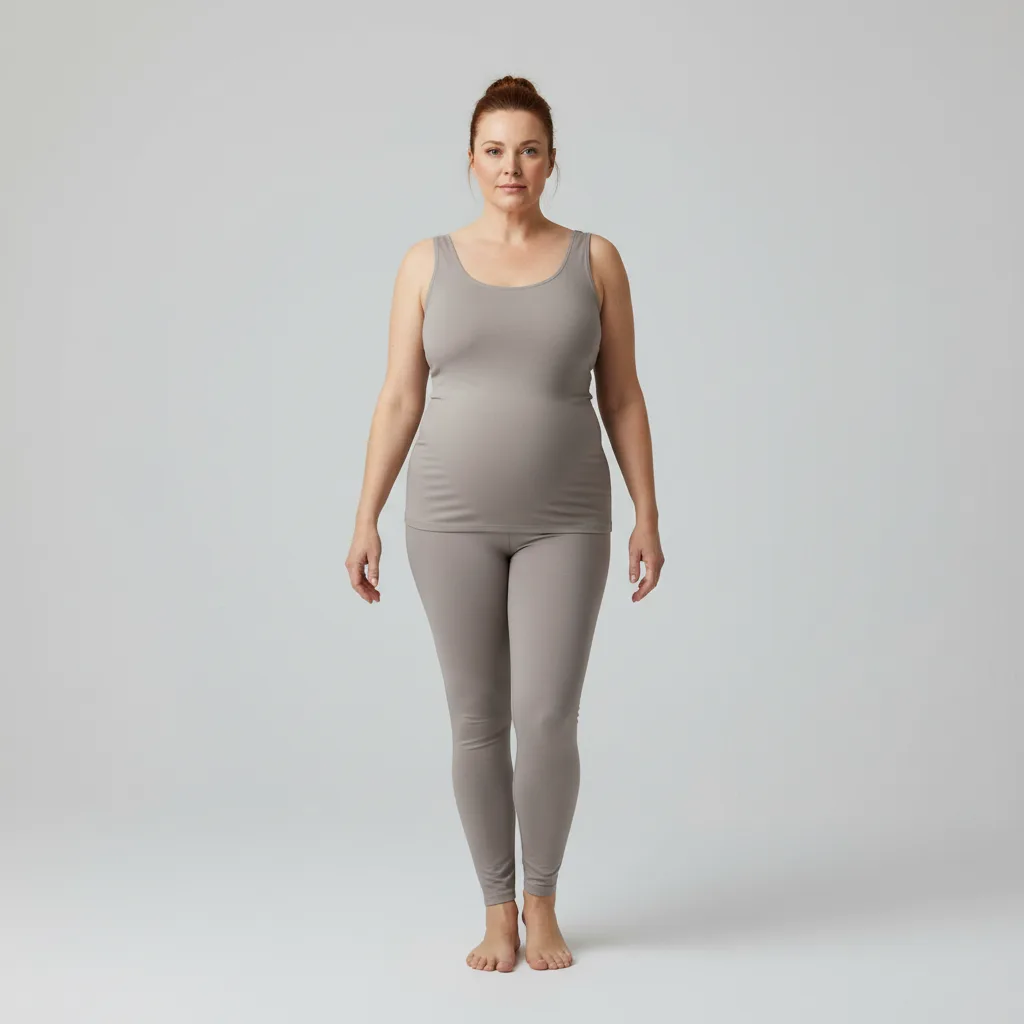
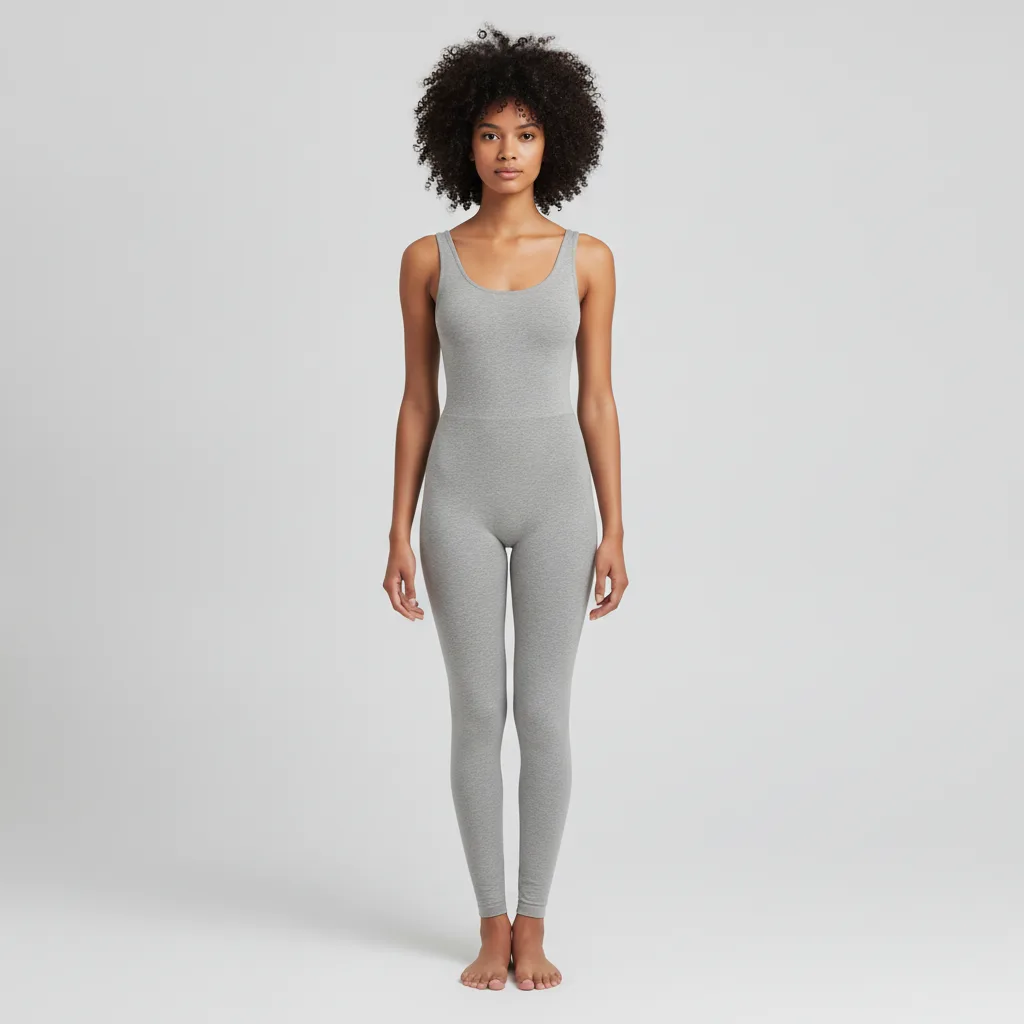
Body shape · shoulders wider than hips
Inverted Triangle Body Shape: The Complete Style Guide
When your shoulders or bust are noticeably wider than your hips, your silhouette naturally tapers downward. Here is how to add volume to your lower half, choose flattering necklines, navigate sleeves and outerwear, and tell this frame apart from a rectangle.
How to Know if You Have an Inverted Triangle Shape
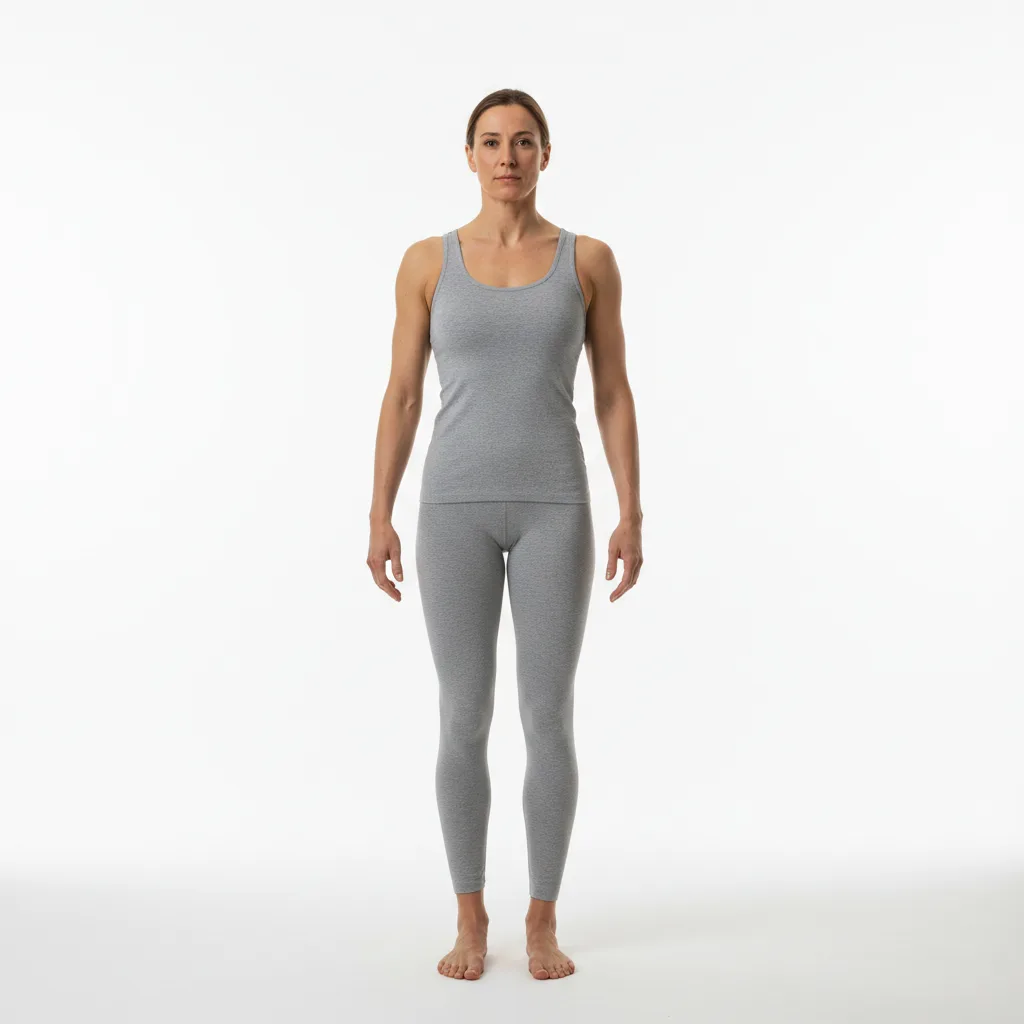
The inverted triangle shape (often called a V-silhouette) is defined by one core trait: your shoulders or bust are more than 5% wider than your hips. Your silhouette tapers downward, making the upper body the widest point. Your waist may be subtly or sharply defined, but that definition does not change your overall type.
This is the classic athletic build seen on swimmers, volleyball players, and anyone with naturally broad shoulders. It also includes women with a fuller bust and slender hips: structurally, the proportions follow the exact same rules.
Shoulders
Measure across the widest point. A telltale sign you can spot without a tape measure: T-shirts fit snugly across the shoulders but hang loose around the hips, and blazers must be bought to fit your shoulders because tailoring that seam is nearly impossible.
Hips
Narrow, often with a flatter seat and lean legs. Skirts and trousers tend to fit loosely at the hip, making a belt an everyday essential.
The Definitive Test
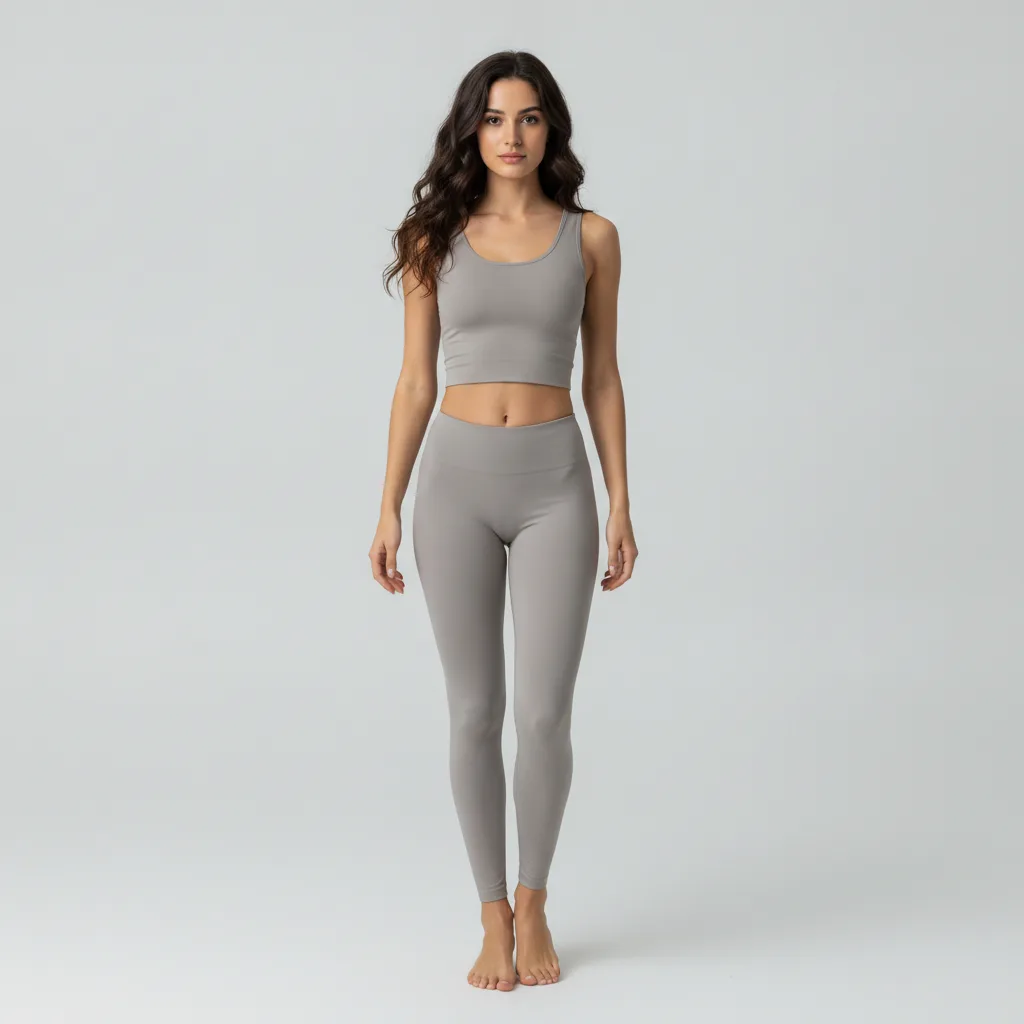
Take a straight-on photo with your arms slightly out to the sides, then imagine vertical lines dropping straight down from the outer edges of your shoulders. On an inverted triangle frame, your hips will sit well inside those lines, forming a clear V-shape. A simple fitting-room reality check: you regularly buy tops a size or two larger than your bottoms, and dresses that fit your shoulders are baggy through the hips.
Proportions
Each bar is measured against the widest point of the silhouette: these are typical proportions for the shape, not your measurements.
| Measurement | What to Check | Inverted Triangle |
|---|---|---|
| Shoulders vs. Hips | Width difference | Shoulders are 5%+ wider |
| Waist | Degree of definition | Varies; does not affect the category |
| Front-facing outline | Overall silhouette | Tapers downward (V-shape) |
| Fitting room | Top vs. bottom sizes | Tops are 1–2 sizes larger |
Find your body shape from a photo →
What Works for This Silhouette
The main objective is to add visual volume to your lower half so your hips balance your shoulders. It is the exact mirror image of dressing a pear shape, using the same styling tools in reverse: lighter colors on the bottom, richer textures below the waist, fullness in skirts and trousers, and clean, understated tops.
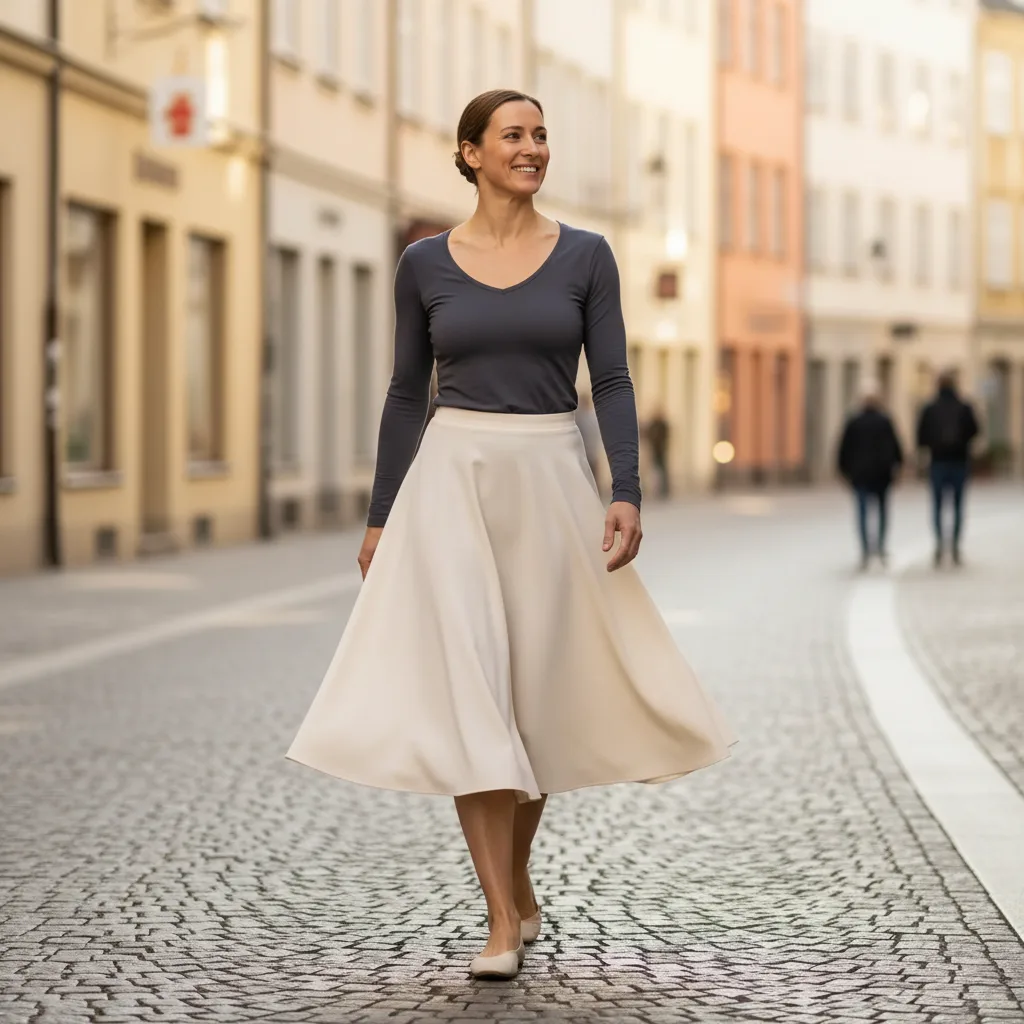
Your second essential tool is the neckline. Shoulder width is read along the horizontal line running across the chest: the longer and flatter that line is, the broader the upper body appears. A V-neck breaks that horizontal span and draws the eye vertically down toward your center.
What Works Against It
Anything that adds bulk to your shoulders or narrows your lower half will throw off your natural balance.
Pay close attention to sleeves: puff sleeves, cap sleeves, shoulder ruffles, and heavy epaulets instantly widen the upper body. If you love a statement sleeve, choose styles where the volume starts below the elbow rather than at the shoulder seam.
Inverted Triangle or a Neighboring Shape?
Inverted Triangle vs. Rectangle: The Five-Percent Rule
If your shoulders are less than 5% wider than your hips, you have a rectangle shape, which does not always require extra volume below. It sounds like a minor difference on paper, but the styling approaches diverge: rectangles can easily add volume on top, whereas inverted triangles look best keeping the top streamlined.
Inverted Triangle vs. Hourglass: Look at the Hips
A fuller bust paired with a defined waist can easily be mistaken for an hourglass. The hips are the deciding factor: if your hips are narrower than your shoulders, your silhouette naturally tapers down regardless of waist definition, meaning you still need to balance your proportions from the waist down.
Inverted Triangle vs. Apple: Look at the Waistline
If your waist is equal to or wider than your hips while your shoulders remain broad, your proportions align more with an apple shape. Apples benefit from long vertical center lines rather than wide, flared skirts.
| Feature | Inverted Triangle | Pear | Rectangle |
|---|---|---|---|
| Widest point | Shoulders | Hips | Shoulders, bust, and hips are aligned |
| Tailoring goal | Add volume below | Add volume on top | Define the waist |
| Color strategy | Lighter on the bottom | Lighter on top | Flexible / balanced |
| Best neckline | V-neck | Boatneck | Flexible / varied |
Wardrobe Essentials by Category
Bottoms
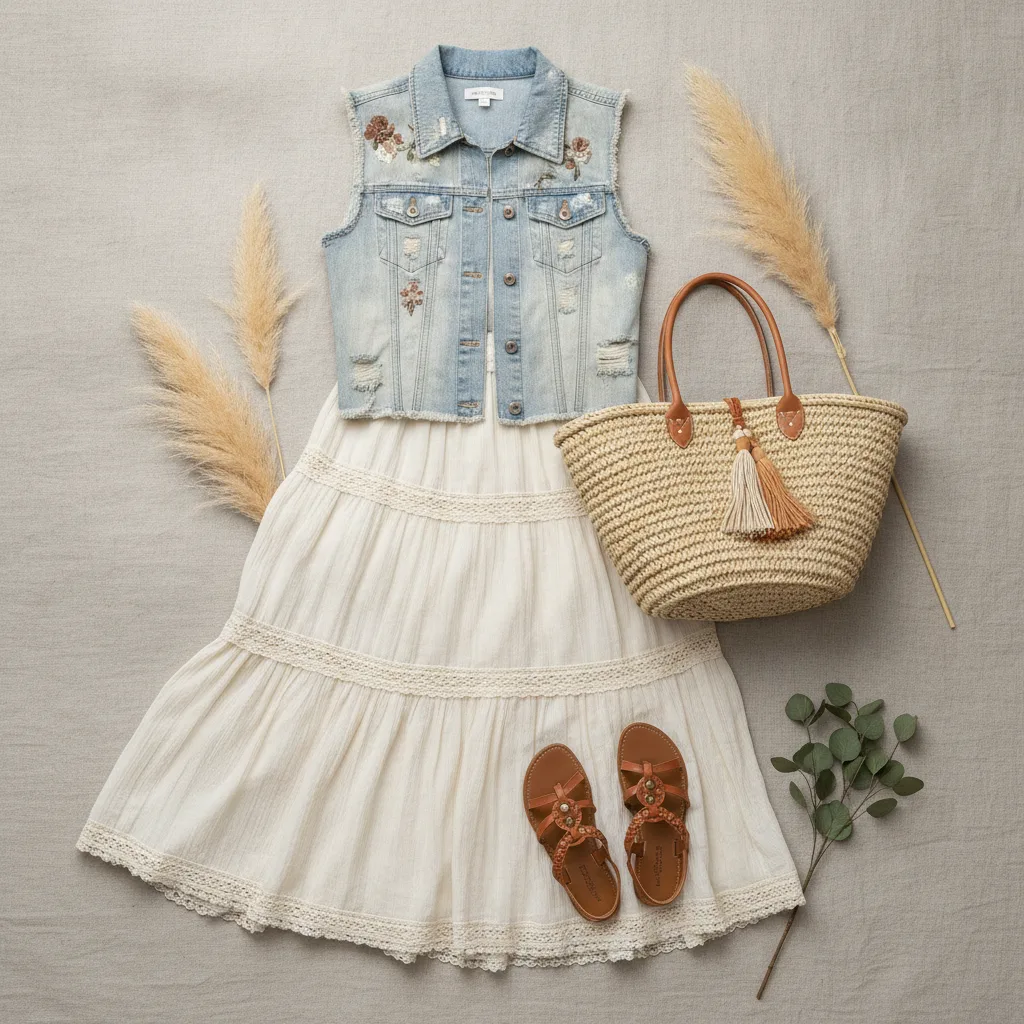
This is your hero department. A-line skirts, full circle skirts, pleats, wide-leg trousers, palazzo pants, pleated fronts, and cargo styles with patch pockets all work in your favor. Anything that adds width to the hips helps balance your upper body—you are one of the few body shapes that look fantastic in hip-level pocket detailing.
Tops
Look for clean lines, fluid fabrics, V-necks or deep scoops, and set-in sleeves without shoulder pads. A dark, solid top is the fastest way to soften a broad upper frame. When wearing sleeveless tops, choose straps that are narrower and set closer to the center of the chest to avoid widening your shoulder line.
Dresses
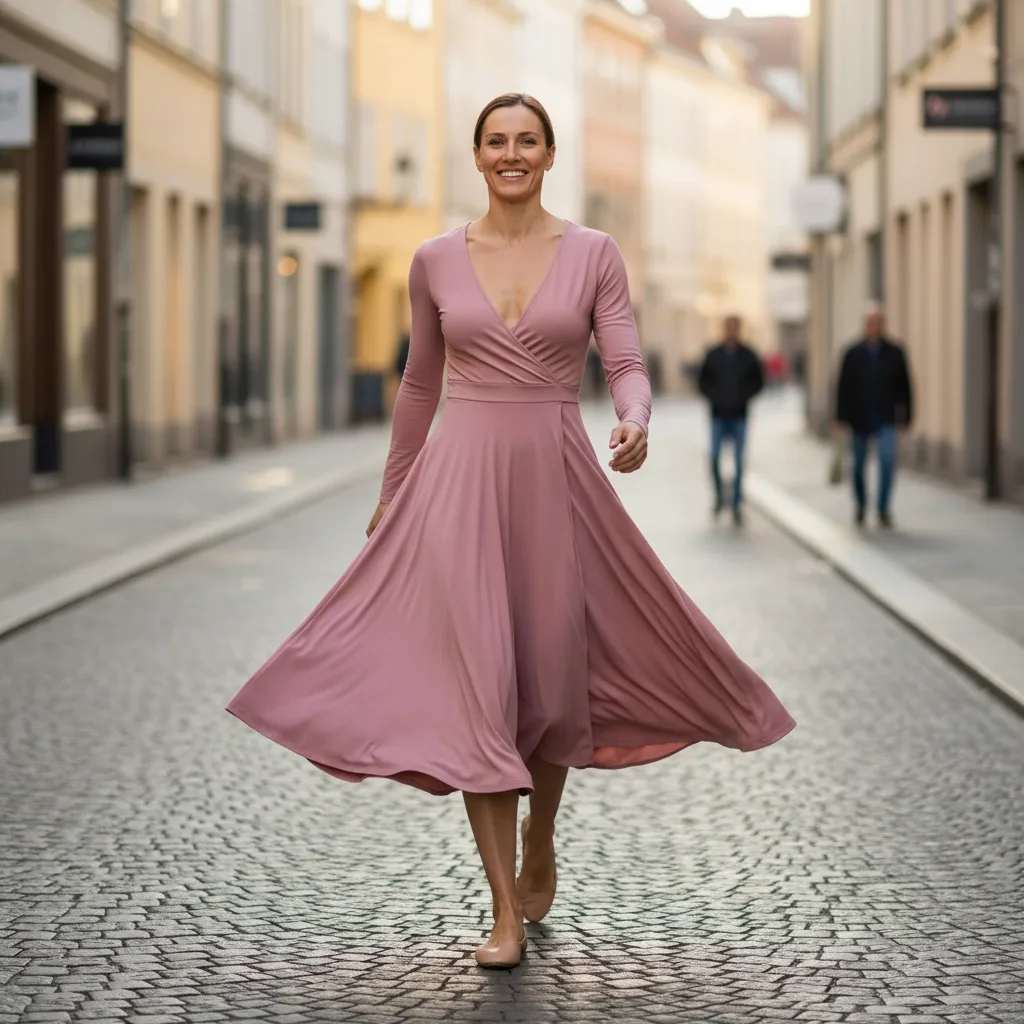
Fit-and-flare dresses, A-line silhouettes, and wrap dresses with deep V-necklines are ideal. Classic sheath dresses are harder to pull off because they follow your natural downward taper rather than correcting it.
Outerwear
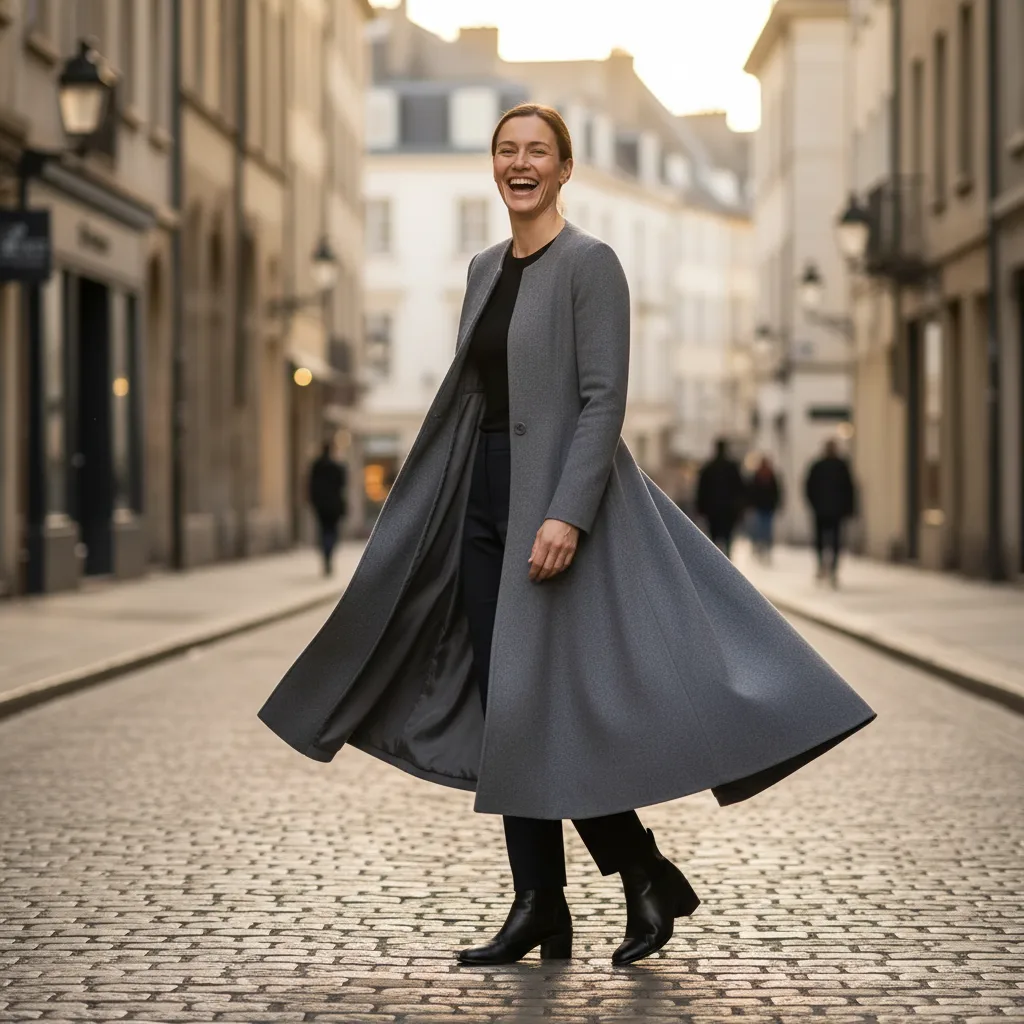
A-line swing coats, trench coats without heavy epaulets, and belted coats that flare from the waist are all great choices. Moto jackets, bomber jackets, and sharp-shouldered coats are the trickiest categories because they add structure right where you already have width. If you want a bomber, opt for soft, unstructured shoulders or raglan sleeves.
Swimwear
Swim bottoms with ruffles, skirted details, or high-cut legs paired with a minimalist V-neck top create great balance. Bandeau tops and wide halter straps tend to exaggerate shoulder width.
Fabrics and Textures
Follow the reverse-pear rule: keep textures rich on the bottom and clean on top. For tops, choose fine knits, lightweight cotton, silk, and drapey viscose. For bottoms, lean into structured cotton, denim, pleats, bouclé, corduroy, and bold prints.
- Great for bottoms: pleated fabrics, heavyweight cotton, corduroy, denim, and bold geometric prints.
- Great for tops: fine knits, silk, matte viscose, and smooth, soft cotton.
- Avoid on top: chunky bouclé, heavy cable knits, chest quilting, high-shine fabrics, and dramatic shoulder volume.
Common Styling Mistakes
The first mistake is sizing jackets to your bust rather than your shoulders. A jacket bought to fit a larger bust often extends the shoulder seams past your natural frame, adding unwanted bulk. Always fit the shoulder seam so it ends right at your shoulder point, then have a tailor take in the waist.
The second mistake is relying on skinny jeans as an everyday base. Skinny jeans emphasize the contrast between a broader top and a narrow bottom more than any other garment. Swapping them for straight-leg or wide-leg styles solves the proportion puzzle immediately.
The third mistake is hiding the upper body in oversized dark clothing. Baggy, shapeless tops without defined shoulder seams read as overall bulk rather than a lean silhouette. A tailored top with an open V-neck creates a much cleaner, more balanced look.
Frequently Asked Questions
Can I ever wear a boatneck?
Boatnecks draw a strong horizontal line across the collarbones, broadening the shoulders. While it is not ideal as an everyday staple, you can easily wear one if you balance it with generous volume down below, such as a full circle skirt or wide-leg trousers.
How can I soften the look of a broad back?
Open backs, delicate straps, and fluid fabrics that drape without clinging to the shoulder blades all work well. Heavy, stiff fabrics with rigid back yokes will make the upper back look wider.
Can I wear horizontal stripes?
On skirts and trousers, horizontal stripes are great because they add visual width. On tops, they are best avoided—especially thick stripes running straight across the chest.
Are backpacks and crossbody bags flattering?
A wide strap crossing diagonally over the chest adds extra visual lines across your upper body. Handbags, totes, and styles carried on the forearm or in hand work much better.
What if my broad shoulders come from sports?
Proportions are styled based on how they appear, not how they developed: the exact same rules apply. The only difference is that athletic shoulders hold their shape naturally, so you can skip structured jackets and shoulder pads entirely.
How should I style a larger bust with this shape?
Great foundational lingerie makes a massive difference: a properly fitted bra lifts the bust and creates space at the waistline. From there, stick to V-necklines and structured volume in your skirts and trousers to maintain balance.
Try it on yourself
Every tool works from a single photo.